


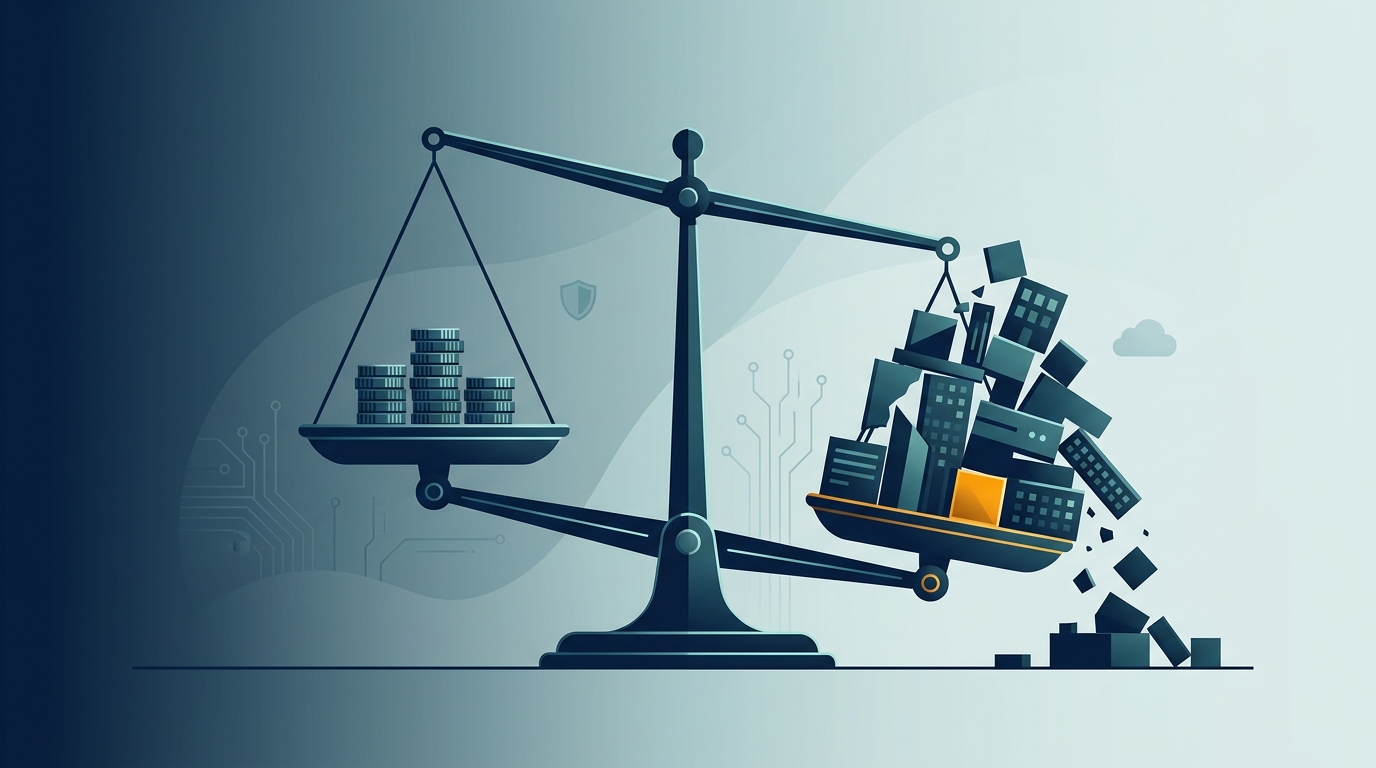

AI gets the headlines. Infrastructure pays the bills. Cybersecurity decides whether the business survives a bad week.
You don’t get to choose which one matters. You have to manage all three.
In one company, leadership debates AI adoption after a competitor ships a new tool. In another, executives defer action while aging infrastructure limps through another year. In a third, leaders wrestle with cyber insurance requirements they aren’t sure they can meet. These aren’t separate problems. They’re different expressions of the same question: what does IT actually cost to run a resilient, competitive business today?
Treating them as isolated decisions is where things go wrong. Under economic pressure, leaders start sequencing, delaying one to fund another. That doesn’t reduce cost. It compounds risk.
Infrastructure: The Debt You Don’t See Coming
Infrastructure doesn’t fail loudly, until it does.
Most organizations aren’t making active decisions about their environment. They’re inheriting years of incremental change. Systems age, dependencies stack up, and costs quietly rise. Then something breaks, and the timeline shifts from planned investment to emergency spend.
Cloud hasn’t solved this. It has changed the shape of the problem. Many companies now pay continuously for capacity they sized once and never revisited. What looked like flexibility becomes waste.
If your IT spend lags while the business grows, that gap isn’t efficiency. It’s deferred liability, and it comes due all at once.
AI: Spending Without Ownership
AI pressure is real, but most organizations aren’t struggling with whether to invest. They’re struggling with why and how.
Adoption is often reactive. A vendor adds a feature. A department experiments. A renewal arrives with “AI” bundled in. The organization starts spending before it defines what success looks like or who owns it.
That’s the real risk. AI is no longer a side experiment, and leadership expects measurable outcomes. But without clear ownership, most deployments stall. At best they become underused subscriptions. At worst they introduce new risk into environments that weren’t ready for them.
Competitive pressure may trigger the investment, but it can’t justify it. If no one owns the result, it isn’t strategy. It’s drift.
Cybersecurity: The One You Can’t Defer
Infrastructure can limp along. AI can stall quietly. Security failures don’t give you that luxury.
The threat environment has shifted from theoretical to operational. Attacks are more automated, more targeted, and more frequent, and the impact is immediate, whether financial, operational, or reputational.
Yet many organizations still treat cybersecurity as something buried inside general IT spend rather than a defined, measurable priority. That makes it harder to track, defend, and scale.
The math is simple. Preventative investment is predictable. Recovery is not. But prevention isn’t always about adding tools. Sometimes it’s about having a tested recovery plan for when something goes wrong anyway. That’s where discernment matters: knowing whether your business needs a stronger security stack, a rehearsed incident response, or both. For many organizations, even a small incident can cause lasting damage, and the difference between surviving it and not often comes down to decisions made long before the attack.
This is the one area where delay doesn’t buy time. It increases exposure.
Why Budget Pressure Makes It Worse
When budgets tighten, the instinct is to cut what feels discretionary. Technology often lands in that category. That instinct fails across all three areas:
- Delay infrastructure and you trade planned cost for emergency cost.
- Pause AI midstream and you absorb spend without realizing value.
- Underinvest in security and you accept a risk you probably haven’t quantified.
The common thread is reactivity. The most expensive decisions aren’t the ones where companies spend too much. They’re the ones where companies wait too long and lose control of timing.
The Questions That Actually Matter
You don’t need a CIO title to manage this well, but you do need clarity.
Do you know what your environment actually costs, and what would happen if a critical system failed tomorrow?
Is every AI investment tied to a defined outcome with a named owner responsible for delivering it?
Can you clearly state what you spend on security and what level of risk that spend buys down?
If those answers aren’t immediate, that’s where the work is.
The Shift Leaders Need to Make
AI, infrastructure, and cybersecurity aren’t competing for budget. They’re interconnected risks. An AI tool layered onto unstable infrastructure without proper security controls isn’t progress. It’s compounded exposure.
The conversation has to move beyond “how much are we spending on IT” to “what outcomes are we driving and what risk are we carrying across all of it.” That requires visibility across all three, not in silos but as a system.
The Bottom Line
The companies that navigate this environment well won’t be the ones chasing every trend. They’ll be the ones making deliberate, coordinated decisions across AI, infrastructure, and security before those decisions are forced on them.
AI will keep evolving. Threats will keep accelerating. Economic pressure isn’t going away. In that environment, deferring technology investment isn’t caution. It’s liability.
Ready to Get Ahead of It?
At Zeytech, we work with leadership teams who are done reacting and ready to build a technology strategy that holds up under pressure. That means honest conversations about infrastructure debt, AI accountability, and security posture. No vendor pitches, no one-size-fits-all frameworks.
Our IT Leadership engagements give you visibility across infrastructure, AI, and cybersecurity so you can make coordinated decisions before circumstances force them. Whether you need a Fractional CIO, a technology roadmap, or a clear-eyed assessment of where your risk actually lives, we start where you are.
If the questions in this article gave you pause, let’s talk.